
Visualizing changes in the physical condition of employees with an app. Promotes DX in health management and helps deter hospital clusters.
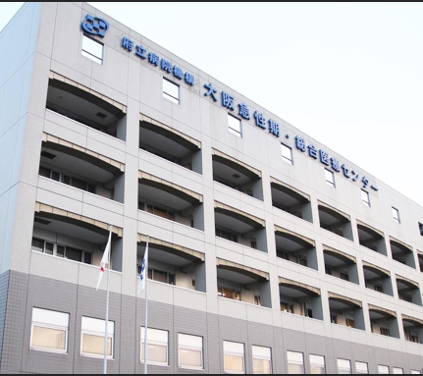
Osaka General Medical Center (Osaka City, Osaka Prefecture) One of the specialized hospitals of the Osaka Prefectural Hospital Organization. It is a comprehensive medical center that provides a wide range of highly specialized medical care, from acute medical care such as emergency medical care and cardiovascular care to cancer care and treatment of intractable diseases, and is a training institution for DMAT (Disaster Medical Assistance Team).
We interviewed Osaka General Medical Center, which is using "respon:sum," a disaster risk management service for medical institutions.
■A single app can be used for everything from emergency calls for 2,000 employees to catching minor changes in physical condition.
It would not be an exaggeration to say that the history of mankind is a history of battles against viral infections. Throughout history, it has been the medical institutions and the healthcare workers who have been at the forefront of the fight against viruses.
The Osaka Medical Center for Acute and Comprehensive Care was established in 1871 as a specialized treatment center for infectious diseases, and has been protecting people's lives and health from infectious diseases for a long time. Today, more than 150 years after its establishment, the hospital provides high-quality medical services as a comprehensive medical center that offers a wide range of highly specialized medical services, from acute care such as emergency medical services and cardiovascular care to cancer care and treatment of intractable diseases.
In order for humanity to overcome the invisible enemy of viruses, it is necessary to take thorough preventive measures, such as setting up a system to detect any signs of the virus as soon as it creeps up. From this perspective, in December 2020, we introduced "respon:sum," a disaster risk management service for medical institutions with a "health information management function," and have been working on preventive measures by centrally managing the body temperature, changes in physical condition, and attendance of approximately 2,000 employees through the application.
The basic functions of respon:sum include a "request to assemble function", a "health management function", and a "bulletin board function" for hospital staff. In the beginning, the Osaka Acute and General Medical Center focused on the functions of "safety confirmation" and "gathering request" in the event of a disaster. Mr. Shoji Tokushige, the chief of the Disaster Countermeasures Office in the General Affairs and Human Resources Group at the center, explains as follows.
"Our center is one of the five specialized hospitals connected to the Osaka Prefectural Hospital Organization. Initially, Osaka Prefecture Hospital Organization had decided to introduce a disaster response system developed and provided by a major security service company, but we were attracted by the fact that Smart119 is a venture company led by a doctor with extensive knowledge of the medical field. We strongly lobbied OIST to introduce respon:sum, a system more suited to medical practice, and this was accepted, leading to the introduction of respon:sum".
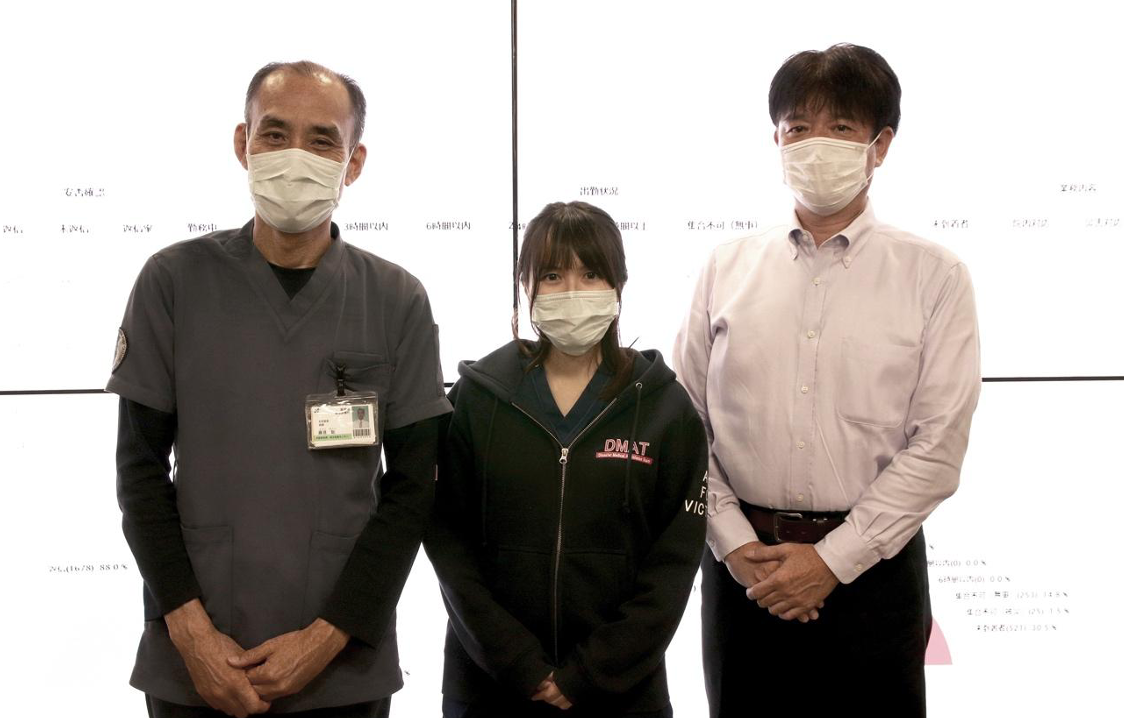
The interviewees. From left, Mr. Satoshi Fujimi, Director of the Advanced Emergency Medical Center, Ms. Rina Uosawa, Radiology Technician, Medical Technology Department, and Mr. Shoji Tokushige, Chief of the Disaster Countermeasures Office, General Affairs and Personnel Group.
■Hastily implemented update to visualize the "causes" of physical condition changes
The Osaka Acute and General Hospital is designated as a "base hospital for disaster management," with the mission of supporting medical institutions that protect the lives of local residents in the event of a major disaster such as a major earthquake. Therefore, in preparation for unexpected disasters and situations, the hospital regularly holds disaster medical drills, etc., and the staff has an outstanding awareness of disaster prevention and crisis management. Dr. Satoshi Fujimi, Director of the Emergency Medical Center, said, "In a hospital where people are constantly confronted with life and death, so-called 'emergencies' are the norm. It is only natural that we are highly aware of them because we always take all possible precautions, and we don't consider 'crisis' or 'danger' to be special."
This situation changed drastically when Covid-19 began to spread worldwide. Covid-19 raged far more vigorously than expected, and nosocomial clusters of the new coronavirus broke out in medical institutions all over Japan, and even the Osaka Acute and Comprehensive Medical Center was not spared.
"Even the Osaka Acute and General Hospital was not spared. This was the only time we felt a sense of crisis and frustration, and the hospital became tense." says Dr Fujimi.
The Osaka Acute and General Hospital hurriedly introduced respon:sum and began to use the "Staff Health Management Function" to monitor changes in the physical condition of staff. The "Staff Health Management Function" sends a notification with the URL of a questionnaire form to smartphones and other devices via LINE or e-mail at a fixed time every day, and staff members can select their body temperature, physical condition, and attendance status from the screen and reply with one click. The data entered and replied by the staff is stored on the server and automatically managed centrally. Mr. Tokushige appreciates the high level of convenience of the respon:sum system, saying, "With this function, we have been able to streamline our health management operations by eliminating the need to fill out and submit forms and input data into the PC, which used to be troublesome."
Subsequently, in order to cope with the frequent outbreaks of nosocomial clusters nationwide, the Japanese government decided to preemptively inoculate healthcare workers with the vaccine from mid-February 2021. The Osaka Acute and General Hospital was also going to start vaccinating its staff in early March 2021. In response to this, Osaka Acute and General Medical Center requested an update to add a new post-vaccination item (14-day adverse reaction status) to respon:sum's staff health management function in order to create a more complete and efficient quarantine system.
Mr. Tokushige said, "In the absence of prior information on who might experience adverse reactions to vaccines, we needed to accurately determine whether a staff member's change in physical condition was due to a viral infection or a post-vaccination adverse reaction. If we could not distinguish between the two, we would have to take measures such as examining those who were experiencing physical changes due to adverse reactions. That's why we approached Smart119 and said, 'If possible, we would like you to add a function that can capture minor changes in physical condition and generate data on signs of adverse reactions after vaccination."
Upon receiving the request, the engineers at Smart119 immediately began development. However, there wasn't much time left before the staff of the Osaka Acute and General Medical Center began receiving vaccines in advance.
■Centralized management of adverse reactions after vaccination. It is also highly user-friendly and contributes to the establishment of a more robust quarantine system.
Thanks to the hard work of the engineers, the Post-Vaccination observation agenda was successfully completed before the vaccination, and was updated to respon:sum in March 2021. We are very grateful to Smart119 for their speedy response despite the tight schedule, and we were impressed by their high level of development capability and flexibility," said Dr. Fujimi.
The new "Post-Vaccination observation agenda" feature allows us to track the recent work status of employees and extract candidates for close contacts in the hospital based on detailed body temperature information, as before. By entering body temperature in increments of 0.1°C and symptoms, even the slightest changes in physical condition can be captured, and signs of adverse reactions after vaccination can be grasped at a glance.
"The system is also very convenient because it can track the physical condition of off-duty staff. If the body temperature rises after inoculation, we know that it is due to an adverse reaction, so we don't need to extract and identify people with whom we have close contact. If we hadn't added the function, we would have had to conduct tests on all the staff members who showed elevated body temperature and investigate the close contacts, which would have taken an enormous amount of time and effort," said Fujimi.
Fujimi also says that the usability of the system is "perfect".
"Some doctors and staff who were not familiar with digital devices and applications found it troublesome to use and input data, but once they started using it, they found it easy to operate, and they could see the health status of their staff at a glance on the screen. The system quickly gained popularity and quickly became adopted. Thanks to respon:sum, the members of the Infection Control Office at our center can concentrate on their other work. Now, we can't imagine health management or cluster outbreak prevention measures without respon:sum," says Fujimi.
Perhaps due to the ease of use, the response rate to the respon:sum health management function (daily) has reached 90% of registered users, further increasing the originally high awareness of risk management. Since the addition of the Post-Vaccination observation agenda, no clusters have occurred at the Osaka Acute and General Medical Center, demonstrating respon:sum's ability to prevent clusters from occurring. With these results, Mr. Tokushige smiles and says, "I am now proud of myself for strongly advocating the introduction of respon:sum to OIST".
The Osaka Acute and General Hospital has successfully strengthened its quarantine and disaster prevention systems with respon:sum. The center is still working hard to fulfill its mission as a frontline base for medical care.
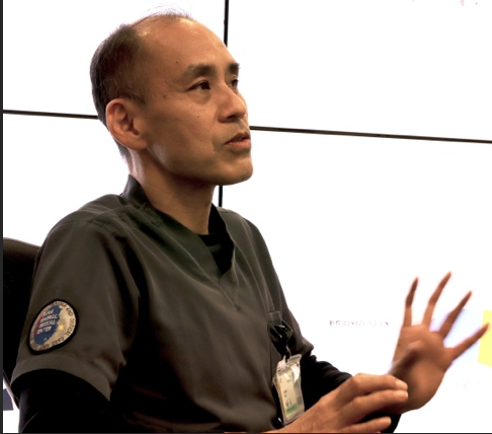
"At first, some people were hesitant about using the system and entering information, but with its simple operation, we can see the health status of our staff at a glance, and the infection control office relies on it for health management and nosocomial cluster control" . (Dr. Fujimi)

"I was in charge of implementing respon:sum from the standpoint of requesting disaster response. The advantage is that we can centrally manage the health status of our staff. We were also able to monitor the rise in body temperature of candidates for intensive contact who were on standby, and were able to prevent clusters from occurring." (Ms. Uosawa)
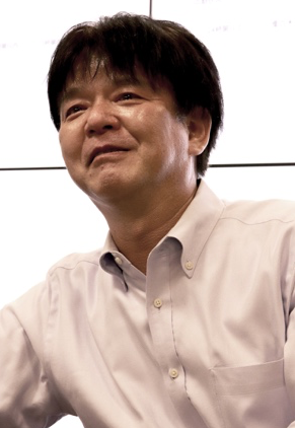
"respon:sum is a system that is tailored to the medical field. Also, when we requested the "addition of a function to capture minor changes in physical condition and generate data on signs of adverse reactions after vaccination", they responded immediately." (Mr. Tokushige)
【Contact information】
Smart119 Inc.
URL: https://smart119.biz
TEL: 043-312-7471
mail: info@smart119.biz
Smart119 won the Audience Award at the "ICF Business Acceleration Program 2021 (BAP) Final Judging Session" held on December 10 (Fri.) last year.
A report on the event is posted on the website of the Future Co-Creation Initiative.
ICF Business Acceleration Program 2021 Final Judging Session
https://icf.mri.co.jp/activities/activities-5672/
As a medical start-up company originating from Chiba University, we have been promoting our 2021 business to realize our mission since our founding, which is "to save as many patients as possible by smartly solving problems in emergency and acute care settings with technology and flexible and original ideas". The "Smart119 emergency medical information service," which has been in operation in Chiba City from 2020, has been continuously improved to address issues in the field, and AI predictive diagnosis algorithms based on field data which have been developed and implemented. In recognition of the system's ability to respond immediately to changing demands for emergency medical services and its future potential, the company was selected as the operator of a demonstration experiment sponsored by a local government. In addition, we have been steadily adding functions to our "disaster crisis management service, respon:sum," in response to Covid-19. Our efforts have been well received, and we have raised approximately 300 million yen through a third-party allocation of new shares.
Taka-aki Nakada, CEO and Representative Director, said, "We are engaged in businesses that utilize a variety of technologies to overcome challenges that cannot be solved by medical technology alone. The year 2021, which began in the midst of Covid-19 pandemic, was a year in which various medical issues became apparent, such as "clusters in hospitals," "adverse reactions after vaccination," and "difficulties in bringing infected pregnant women to emergency rooms," and there were many opportunities for us to quickly address and improve these issues. By proactively adding functions to "respon:sum," we were able to support the business continuity of medical institutions in a variety of emergency situations. "Smart119" has been selected for a demonstration experiment by a local government outside Chiba Prefecture, and the development of an AI predictive diagnosis algorithm for stroke has been completed. Our proactive efforts to implement the results of medical research into society using ICT and AI have been highly evaluated, and in addition to additional investment from existing shareholders, we were able to receive new investment from Sony and PKHSA funds. In 2022, we will continue to accelerate the strengthening of our business and development to deliver the latest medical care throughout Japan and build a future medical care system where everyone can feel secure.
■Results for 2021
【1: Response to the new coronavirus infection】
A number of functions have been added to the Disaster Crisis Management Service "respon:sum".
3rd wave October 2020 - February 2009
December 2020: "Staff health management function" added to respon:sum.
[Objective] To deter clusters in hospitals
4th wave March to June 2021
March: "Health management function for employees after vaccination" added to respon:sum
[Objective] Management of adverse reactions after vaccination of healthcare workers
June: Added a "bulletin board function" to respon:sum.
[Objective] To gather knowledge on treatment and prevention measures in response to the emergence of delta strains.
July: Released an application for digital devices to respon:sum.
[Objective] To promote the use of digital devices by employees and to support remote work such as home nursing.
5th wave June to September 2021
September: "Deployed department function" was added to respon:sum.
[Objective] To support organized disaster medical activities
September: Development and operation of "COVI-CO" (Covid-19 Coordination Powered by respon:sum), a support system for coordination of hospitalization of pregnant and nursing women with Covid-19, has started.
[Objective] To solve the difficulty of bringing infected pregnant and nursing women to emergency rooms
November: "COVI-CO" introduced in Chiba Prefecture
【2: AI predictive diagnosis algorithm developed and put to practical use】
We have completed the development of the "Stroke AI Predictive Diagnosis Algorithm," which was adopted by the Japan Agency for Medical Care Development (AMED) for its R&D project "Research and Development of Emergency Medical Care Prediction," a project for developing technologies for advanced medical equipment and systems. This function will be added to "Smart119," an emergency medical information service, and is expected to improve the life-saving rate and reduce subsequent injuries. Starting with the introduction of the system to the Chiba City Fire Department (during fiscal 2021), AI predictive diagnosis will be implemented in society. The research paper has been published in the international scientific journal "Scientific Reports" (published by Nature Research in the UK).
【3: Adopted as a government innovation project】
In September, "Smart119," an emergency medical information service, was adopted for the "TRY! YAMANASHI! Demonstration Experiment Support Project" sponsored by Yamanashi Prefecture. A demonstration experiment will be conducted in Yamanashi City in southeastern Yamanashi Prefecture until March 2022 to verify the development and operation of a system optimized for the region, including the elimination of difficulties in bringing in emergency medical services and the improvement of the time required to receive medical services.
【4: Support from four venture capital firms】
In August, we raised a total of 306.75 million yen in funding from Nissay Capital Corporation, MSI Capital Corporation, Sony Innovation Fund, GK PKSHA Technology Capital, and Sparks AI & Technologies Investment Co.
【5: Enhancement of sales and business development structure】
In addition to enhancing our technology development system, Smart119 Inc. is also focusing on expanding our sales and business development system so that our services can be used by many medical institutions and healthcare professionals. The current leader of the sales division is Minako Koga, who was one of the members who launched "LINE" as the executive officer in charge of corporate business, and she will join us from 2021. In 2021, the latest functions of the disaster countermeasure system "respon:sum" were introduced in many hospitals, including the Osaka Acute and General Hospital and Chiba University Hospital. In the development of COVI-CO, a hospitalization coordination support system for expectant and nursing mothers infected with the new coronavirus, the cooperation with Chiba Prefecture made it possible to introduce and start operations as soon as possible. Currently, preparations are underway to begin using the system for the third round of vaccinations for medical personnel, and we are making progress in building a system that will deliver future medical care with peace of mind to as many people as possible.
■Business Policy for 2022
【1: Nationwide deployment of "Smart119," an emergency medical information service】
We will start a demonstration experiment in Yamanashi Prefecture, which has been adopted in 2021. Utilizing the results of this experiment, we will provide a flexible system throughout Japan that can meet the needs of each local government, optimized for regional characteristics such as population composition, climate, number of medical facilities, number of fire stations, and number of ambulances owned. We have already received many requests from municipalities and fire departments outside of Chiba Prefecture, and next year we plan to proceed with demonstration tests in cooperation with even more municipalities across Japan.
【2: Use of the COVI-CO Support System for Coordinating】
The problem of the delay of hospitalization for emergency patients by being rejected from multiple hospitals has been a social issue since before the coronavirus disaster. In particular, the hospitalization of pregnant and nursing women with Covid-19 is an urgent issue. We will promote the nationwide deployment of this system, which was introduced in Chiba Prefecture.
【3: Research and development to expand the target symptoms of AI predictive diagnosis algorithm】
The research and development of the AI predictive diagnosis algorithm, which has been put to practical use for stroke, will be continued in collaboration with the Department of Emergency and Intensive Care Medicine, Graduate School of Medicine, Chiba University. We plan to add acute cardiac disease as a new target.
<About Smart119, Inc.>
Smart119 Inc. is a start-up company established by an active emergency physician and originating from Chiba University School of Medicine.
Smart119 is a startup founded by an active emergency physician and originated from Chiba University School of Medicine. In order to "change the current '119'", Smart119 has developed and operates an emergency medical support system "Smart119" using voice recognition and AI.
In Chiba City, we are conducting a research and development project on emergency medical care for the Japan Agency for Medical Development (AMED).
Smart119 aims to "create future medical care with peace of mind.
Visualizing Disaster Medical System with "respon:sum", Contributing to Hospital Resilience
We interviewed Rinku General Medical Center, a local independent administrative institution, which uses "respon:sum", a disaster risk management system enhancement service for medical institutions.
■ Adoption of respon:sum for centralized management of hospital staff health management, emergency call-up and deployment
The Japanese archipelago is so prone to natural disasters that it is often referred to as the "disaster island chain." Typhoons, torrential rains, earthquakes, and volcanic eruptions have repeatedly caused serious damage. It is predicted that there is a high probability of a major earthquake occurring along the Nankai Trough and in other areas within the next 30 years, so it is essential to be prepared.
In the event of a large-scale disaster where a large number of people are expected to be seriously or lightly injured, "base hospitals for disaster management" are required to play a role and function to support medical institutions that protect the lives of local people. Rinku General Medical Center in Izumisano City, Osaka Prefecture, is one of these "base hospitals for disaster management." It is one of only four hospitals in Japan designated as a medical institution for specific infectious diseases, and is also equipped with the Senshu Regional Mother and Child Medical Center and the Senshu Emergency Medical Center. In the event of a major natural disaster, the hospital can be used as a medical center.
In order for medical institutions to function at their full potential in the event of a large-scale natural disaster, it is essential to establish a disaster medical system, foster disaster prevention awareness among staff, and conduct drills with an awareness of the actual situation. The Rinku Medical Center introduced Smart:DR (hospital common name: DCS), the predecessor of "respon:sum," a disaster risk management system enhancement service for medical institutions provided by Smart119 Corporation, in 2016. In response to the pandemic of Covid-10, we added a "staff health management function" in March 2021, and have been using the application to centrally monitor the body temperature and physical condition of approximately 1,100 staff members, their attendance status, and the occurrence of adverse reactions after vaccinations. In September 2021, a new function was added to "respon:sum" to support disaster medical operations, such as the allocation of personnel to medical aid stations set up in the event of a disaster and the reorganization of medical teams in response to changes in the situation.
Dr. Maiko Narita, Chief of the Department of Emergency Medicine at the center, explains the efforts to strengthen the system as follows.
Our center is a base hospital for disaster medical services, which includes a center for specific infectious diseases, a regional perinatal care center, and a lifesaving center. In order to serve as a role model for hospitals with such functions, we have decided to introduce and utilize 'respon:sum' to promote the resilience of our disaster medical system.
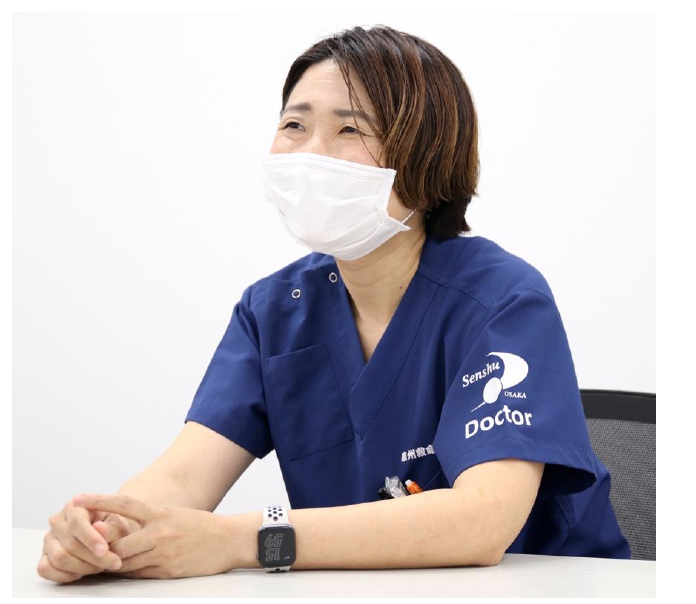
Whenever there is a change in personnel assignments, the information is immediately reflected on each individual's terminal, allowing us to share information. We feel that this has made it possible to 'visualize' assignments and roles, which is very convenient. (Maiko Narita, Chief doctor, Department of Critical Care)
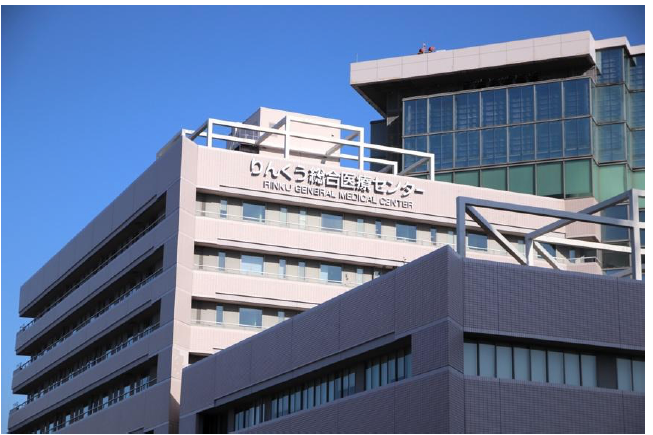
Rinku General Medical Center (Izumisano City, Osaka) aims to become a role model of a hub hospital for disasters.
It is one of the leading medical institutions in Japan that has a center for specific infectious diseases, a regional perinatal care center, and a lifesaving center.
■We have revamped our old system of safety confirmation, call-out requests, and personnel allocation. Everything is now electronic and can be completed with a single application
In the event of a disaster, the first thing a medical institution should do is to confirm the safety of its staff and gathering them. Prior to the introduction of respon:sum, Rinku Medical Center used to confirm the safety of staff, instruct staff to come to the hospital, and confirm who was able to come to the hospital via e-mail on cell phones and smartphones during disaster drills assuming a large-scale disaster.
"However, with cell phone and smartphone e-mails, users need to actively check their e-mails, and there were many staff members who set their notifications to off. Because of these factors, many staff members were unaware of the hospital's request to come to the hospital, and the system was not very user-friendly, so we felt the need to improve it," said Dr. Narita.
In fact, immediately after the 2018 Northern Osaka Earthquake (maximum seismic intensity of 6.0 on the Japanese scale), the safety confirmation and attendance requests sent to about 1,000 employees via cell phone did not go as smoothly as expected. Furthermore, when the same request was sent during the disaster drill in 2020, less than 40% of the employees responded.
The issues were not limited to safety confirmation and instructions to gather.
In addition to medical staff such as doctors, nurses, and medical technicians, medical institutions are also supported by a large number of administrative staff. In times of disaster, the roles and assignments of clerical staff in particular tend to be unclear, and even if staff are called in, it is meaningless unless they can be assigned to the appropriate departments and a disaster medical system can be established as soon as possible. Mr. Nobuyuki Oku and Mr. Kentaro Nakayama from the General Affairs Section said, "In the past, we used an analog method for staff allocation, which was not very convenient.
In the past, we used whiteboards, mock-up papers, and sticky notes to manage personnel assignments and roles at the Disaster Countermeasures Headquarters, which is set up in the event of a disaster. As a matter of course, if the sticky notes were lost, it would be difficult to share information as it would be difficult to know who was in charge of what role. Also, we needed to update the personnel assignments flexibly depending on the situation, but it was not convenient to check whether the assignments had been updated or not," says Mr. Oku.
In the past, we used to create a paper-based map of the departments, and we had to go all the way to the place where the map was posted in order to check the contents. Since we did not have a system that allowed us to see at a glance who was assigned what role, I think we had a poor operational management system that could easily lead to confusion in the field when a large-scale disaster actually occurred.
With an eye on the future, the Rinku Medical Center planned to digitize all personnel assignments to first aid stations, etc., and to add functions that could be realized with a single application. Initially, respon:sum did not have a "department map" function, but in response to a request from Rinku General Medical Center, Smart119 Inc. began development.
When we consulted with Smart119's development engineers, they agreed to give it a try, by adding the function to respon:sum.

Assembly request screen. After confirming the safety of the user, tap to enter whether or not the user can accept the assembly, and how long it will take.

Request transmission screen. The content of the request, meeting place, and target audience can be sent from a digital terminal (smartphone, tablet, etc.).
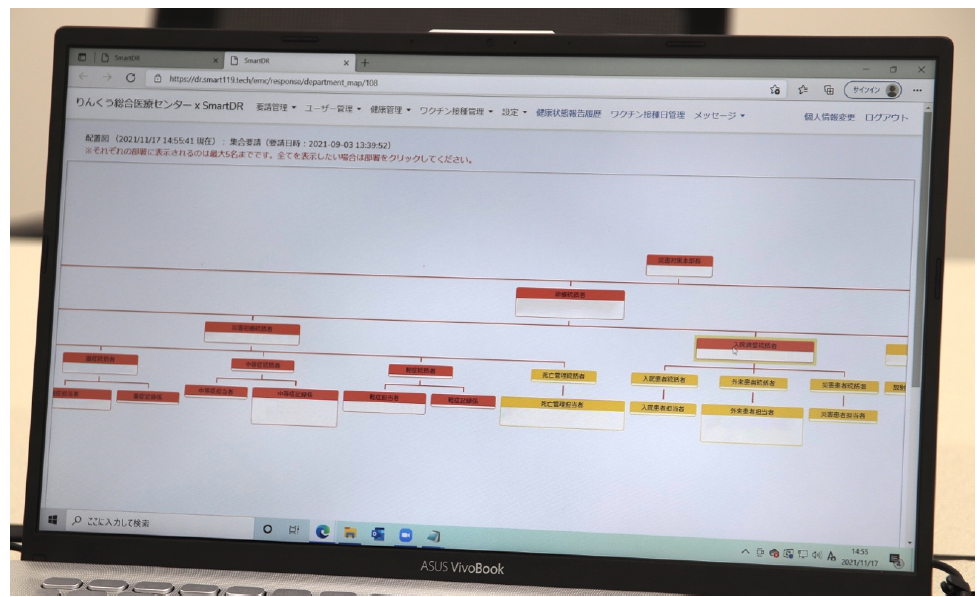
Allocation chart. The organization chart centrally manages who is assigned to what department and in what job area. This screen can be enlarged and displayed on an electronic whiteboard or projector.
■Large-scale disaster drill proves speedy establishment of disaster medical system
Not long after that, the "Allocation Chart function" was completed and added to respon:sum. With the newly added "Allocation Chart function" , it is now possible to centrally manage personnel information such as first aid stations, medical team composition, and deployment departments, including staff safety confirmation and assembly requests, on the PC of the disaster control headquarters. In addition, the systematic display of the organization chart allows for an easy grasp of the overall disaster medical system.
"In the event of a disaster, the role of administrative staff is to provide medical support. In the event of a disaster, the role of administrative staff is to provide medical support, and while a flexible approach to the division of roles is desirable, they are also expected to play the role of organizers, analyzing the situation from a broad perspective and taking appropriate measures according to the situation. In this respect, I feel that respon:sum is the perfect system for us, as it allows us to check the response and attendance status, give placement instructions, and check the placement status on a single screen." said Mr.Oku.
"We are satisfied that we have been able to strengthen our disaster response capabilities with the ease of use, such as the ability to enlarge and project department maps on an electronic whiteboard or projector," said Mr. Nouchi.
In fact, on September 3, 2021, soon after the addition of the function, the Rinku Medical Center conducted a large-scale drill using respon:sum. respon:sum was used to confirm the safety of staff members and request them to assemble, and then the assembled staff members were assigned to the appropriate departments, demonstrating the speedy establishment of a disaster medical system.
"Unlike before the introduction of respon:sum, push notifications of safety confirmation and assembly requests are sent to digital devices such as smartphones, which has drastically reduced the number of cases where people were unaware of the safety confirmation and assembly requests, and the response rate from staff has increased by 50% compared to the previous year. The response rate from the staff increased by 50% compared to the previous year, which was in line with our expectations. In addition, when there is a change in personnel assignments, the information is immediately reflected on each individual's terminal and can be shared, making it possible to 'visualize' assignments and roles, which I feel is very convenient." (Head doctor Narita)
The efforts of the Rinku General Medical Center to strengthen its disaster response capabilities are not over. Dr. Narita says, "I would like to continue brushing up the system to make it a more robust medical base against disasters."
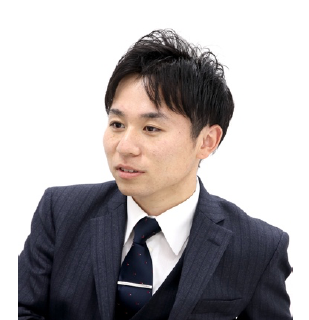
"In the event of a disaster, the role of the administrative staff is to provide medical support. The role of the clerical staff is to provide medical support, to analyze the situation from a broad perspective, and to act as an organizer to take appropriate measures according to the situation. In this respect, I feel that Responsum is the perfect system for us, as it allows us to check the response and attendance status, issue deployment instructions, and confirm the deployment status on a single screen." says Mr. Nobuyuki Oku, General Affairs Section.
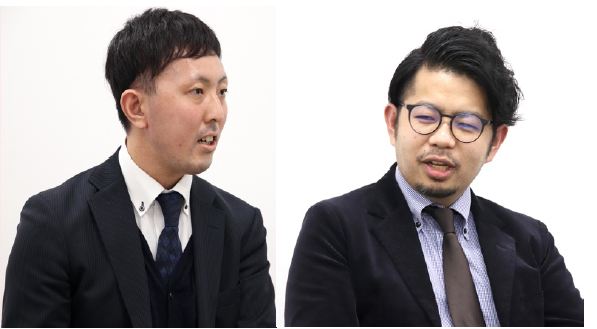
"We are satisfied that we have been able to strengthen our disaster response capabilities with the excellent usability of the system, such as the ability to enlarge and project the map of departments on an electronic whiteboard or projector." says Mr. Kentaro Nakayama, General Affairs Section, and Mr. Junya Nouchi, Chief of the General Affairs Section.
【Contact information】
Smart119 Inc.
URL: https://smart119.biz
TEL: 043-312-7471
mail: info@smart119.biz
Smart119's AI diagnosis was reported on Nikkei Sangyo Shimbun on November 18, and the Nikkei Shimbun morning edition on November 26.
It was also published in the electronic version on November 25.
Smart119, developed by Chiba University, diagnoses stroke symptoms at the time of emergency transport by AI
https://www.nikkei.com/article/DGXZQOCC2284E0S1A121C2000000/